Give Every
IBC Tote a
Second Life
Request quotes to buy, sell, recycle, or recondition intermediate bulk containers. We match your request with partner suppliers in our network. Reusing a tote avoids making a new one.
Request a Free Quote
IBC 101
What Is an
IBC Tote?
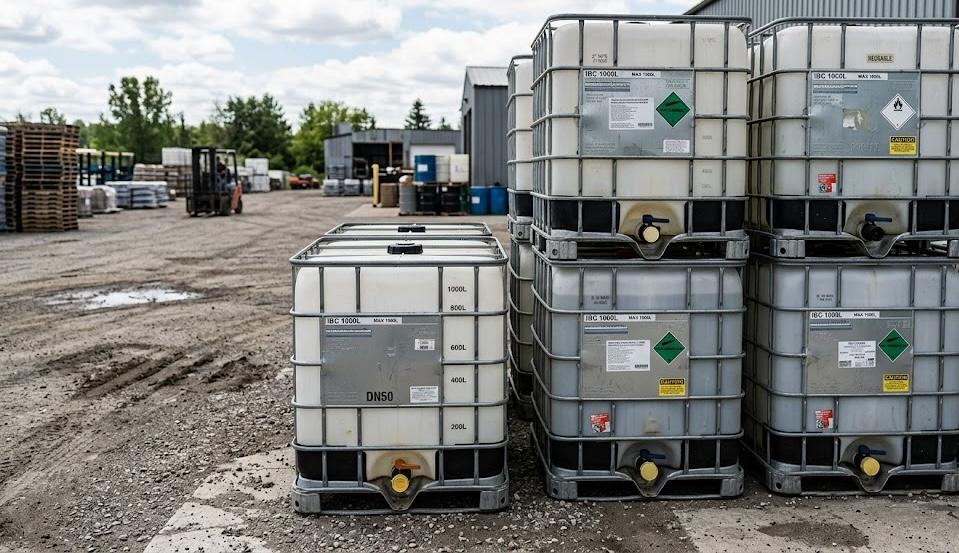
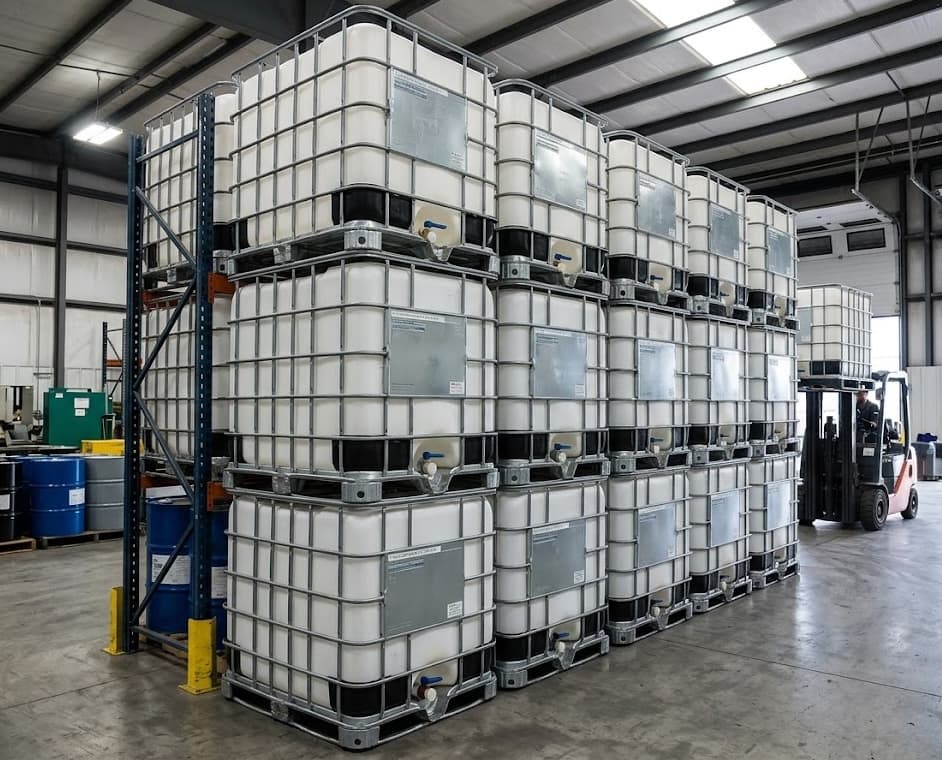
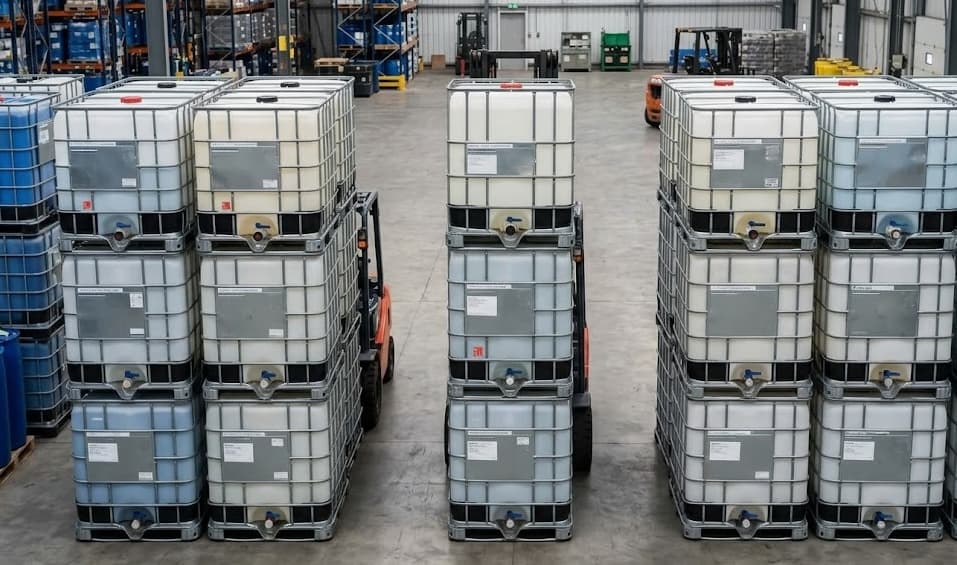
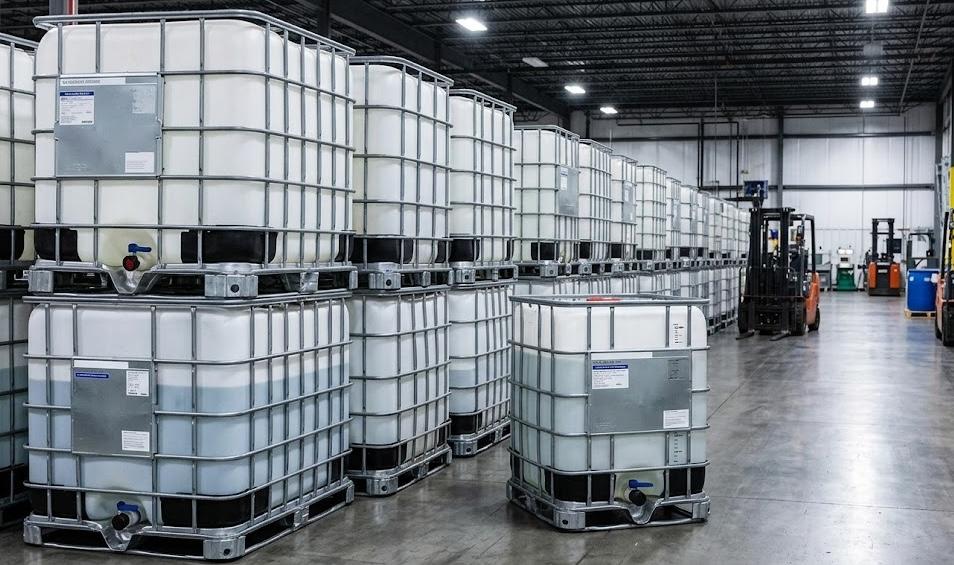
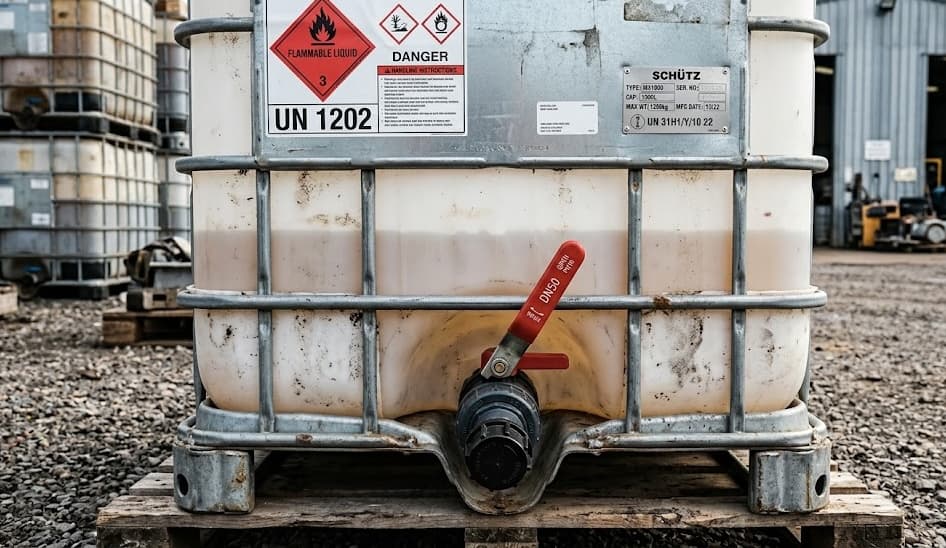
An Intermediate Bulk Container (IBC) — commonly called an IBC tote, IBC tank, or simply a tote — is a reusable industrial container designed for the storage and transport of bulk liquids, pastes, and granulated materials. IBC totes bridge the gap between standard 55-gallon drums and tank trucks, moving roughly 275 to 330 gallons of product in a single pallet-mounted unit.
The most common type is the composite IBC: a blow-molded high-density polyethylene (HDPE) inner bottle surrounded by a tubular galvanized-steel cage, all mounted on a standard 48" x 40" pallet. This design combines the chemical resistance of plastic with the structural strength of steel, creating a container that is stackable, forklift-compatible, and suitable for road, rail, and sea transport.
IBC totes are used in many sectors, from food and beverage to chemical processing, agriculture, automotive, and water treatment. Their standard footprint, large capacity, and forklift access make them a versatile bulk-packaging format.
Standard Specifications
Services
Every IBC Request,
One Form
Buy IBC Totes
Reconditioned and new IBC totes in common sizes and grades, sourced through partner suppliers.
→Request Grade A, B, or C reconditioned totes, rebottled units, or new totes in 275 and 330 gallon sizes. Tell us what you plan to store, how many you need, and where they go, and a partner supplier in our network follows up with availability and a quote.
Sell Your Totes
Have surplus or empty totes? Request an offer from a partner supplier that buys used IBCs.
→Partner suppliers buy used totes in reusable condition and may arrange pickup. Offers depend on size, condition, previous contents, quantity, and location. Send the details through the form and a supplier follows up.
IBC Recycling
Totes that can't be reused can be taken apart so the plastic, steel, and pallet are recycled.
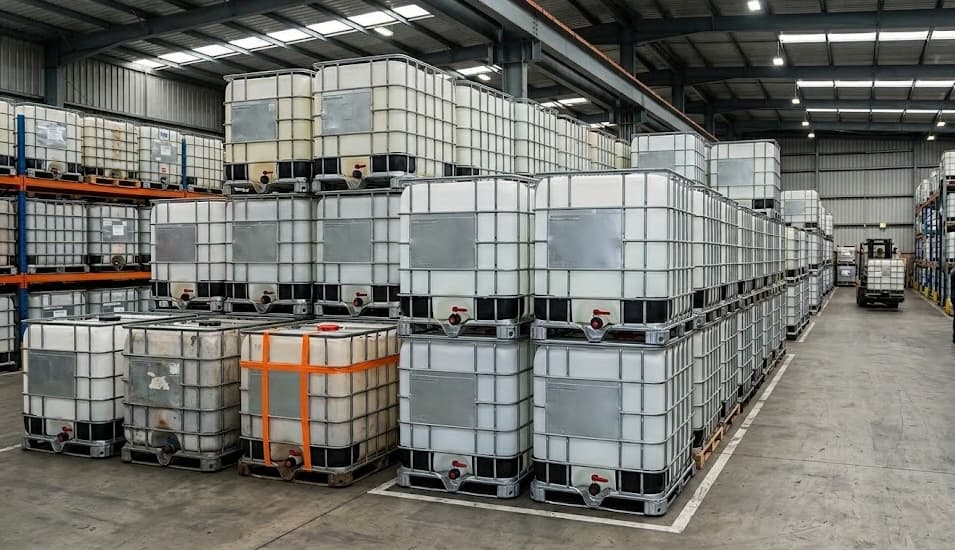
→When a tote is past reuse, recyclers usually separate the HDPE bottle, the steel cage, and the pallet so each material can go to its own recycling stream. A partner supplier can tell you what they accept and what documentation they provide.
Cleaning & Reconditioning
Washing, inspection, and part replacement so a used tote can go back into service.
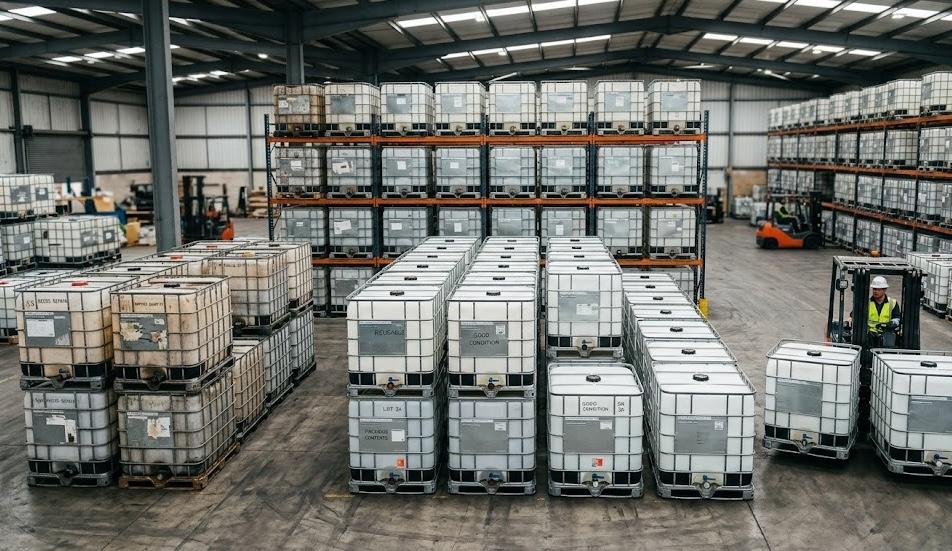
→Reconditioning typically means draining, washing the bottle, inspecting the bottle and cage, and replacing worn valves, gaskets, and caps. Whether a tote can be reconditioned depends on what it held and its condition.
Pickup & Delivery
Delivery of totes you buy and pickup of totes you sell, available through partner suppliers.
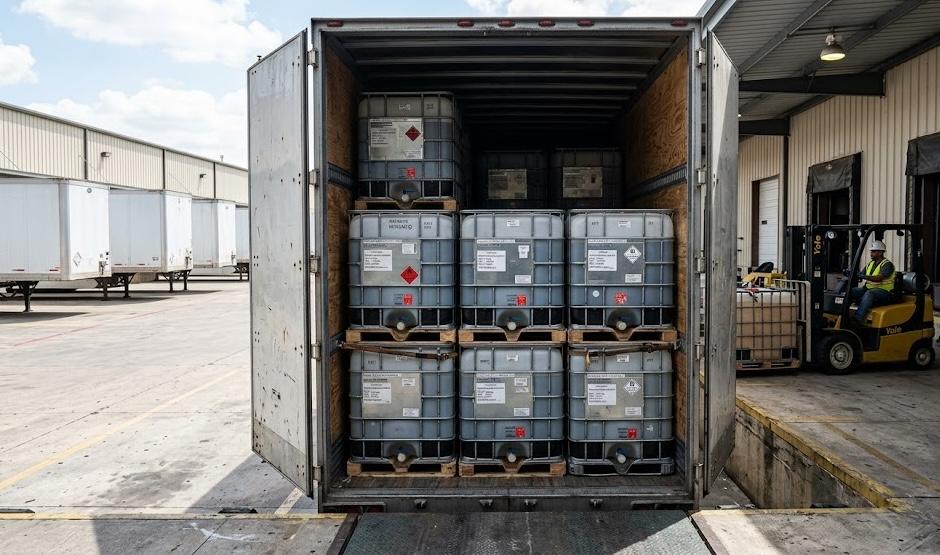
→Partner suppliers arrange freight for orders and pickups. Timing and cost depend on quantity, distance, and site access such as a loading dock or forklift. Include those details in your request.
Custom Options
Different valves, fittings, lids, and accessories to suit what you store and how you dispense it.
→Common options include valve and adapter changes, vented caps, and heating blankets for viscous products. Ask in your request; availability depends on the partner supplier.
Simple Process
How It Works
IBC Totes Recycle is a referral service. Here is what happens after you send a request.
Send a Free Request
Tell us what you need: buy, sell, recycle, or a service. Include the size, grade, quantity, and your ZIP code. The request is free and there is no obligation.
We Match a Supplier
Your request goes to a partner supplier in our network that handles IBC totes for your area and request type.
The Supplier Follows Up
The partner supplier contacts you about availability, condition, pricing, and logistics, and answers your questions.
You Decide
Compare the quote with your needs. If you go ahead, the partner supplier sets the price, terms, and delivery or pickup with you directly.
Same Performance.
Less New Material.
A well-cleaned, inspected tote can do the same job as a new one for many products, usually at a lower price. Reusing a tote avoids building a new one, and recycling one that is worn out keeps its plastic and steel in use.
Reuse
Avoids making a new tote
Rebottle
A sound cage can take a new bottle
Recycle
Plastic, steel, and pallet separated
Quote
Free, no-obligation request
Reconditioned
Recyclable
Delivery Through Partners
Sectors
Industries We Serve
IBC totes are the backbone of bulk-liquid logistics across dozens of industries. We provide tailored solutions for each sector, ensuring that container grade, cleaning standards, and regulatory compliance match your exact requirements.
Chemical Manufacturing
Bulk storage and transport of detergents, acids, solvents, and specialty chemicals, matched to the tote's material compatibility.
Food & Beverage
Juices, syrups, oils, and brewing ingredients, typically in new totes or food-use totes with a known history.
Agriculture
Fertilizers, liquid feed, and crop inputs, plus water storage on farms.
Automotive
Coolants, lubricants, washer fluid concentrate, and parts-cleaning fluids in bulk.
Construction
Concrete admixtures, sealants, and dust-suppression water on job sites.
Cleaning Products
Concentrated detergents, sanitizers, and degreasers shipped in reusable bulk containers.
Water Treatment
Treatment chemicals and pH adjusters in totes with compatible valves and closures.
Rainwater & Home Projects
Rinsed totes that held non-hazardous contents are popular for rainwater collection and garden use.
Knowledge Base
Latest from Our Blog
Guides on IBC tote sizing, grades, cleaning, repurposing, and reuse.
Complete Guide to IBC Tote Sizes and Dimensions
275 gallon and 330 gallon IBC totes compared: typical dimensions, pallet footprint, and how to choose the right size.
Read More →IBC Tote Grades Explained: A, B, and C
What Grade A, B, and C usually mean for reconditioned IBC totes, and how to pick a grade for your application.
Read More →How to Properly Clean and Maintain IBC Totes
Practical basics for rinsing, cleaning, and maintaining IBC totes for reuse, with safety notes.
Read More →Common Questions
Frequently Asked Questions
Quick answers about buying, selling, recycling, and reconditioning IBC totes.
What is an IBC tote and what is it used for?
An Intermediate Bulk Container (IBC) is a reusable industrial container, typically a 275 or 330 gallon HDPE bottle inside a galvanized steel cage on a pallet, used to store and move bulk liquids, pastes, and granular materials in food, chemical, agricultural, and water-treatment work.
Is a reconditioned IBC tote cheaper than a new one?
Usually, yes. A cleaned and inspected used tote generally costs less than a new one, but prices change with size, grade, quantity, and location. Pricing is by quote from partner suppliers, so submit a free request to see current numbers.
Do you offer delivery and pickup for IBC totes?
Pickup and delivery are available through partner suppliers in our network. Requests come from across the US, and availability depends on partner suppliers near you. Include your ZIP code in the quote form so the right supplier can follow up.
Can reconditioned IBC totes be used for food products?
Only totes that previously held food-safe contents and were cleaned for food use are suitable, and many buyers choose new bottles for food contact. Tell us what you plan to store and ask the partner supplier for the tote's history and documentation. Check current regulations for your product.
How does selling used IBC totes work?
Send a free request with the number of totes, their size and condition, and what they held. A partner supplier in our network reviews it and follows up with an offer or a recycling option. Photos help them assess the totes.
Make the Switch to
Sustainable IBC
Whether you need to buy, sell, or recycle IBC totes, send a free, no-obligation quote request and a partner supplier follows up.